Service detects fault ahead of the bit and maximizes reservoir contact
Download PDFDeep Water

Predictive geosteering optimization in complex reservoirs

Continental Shelf

In horizontal wells, mapping resistivity changes ahead of the bit allows for earlier decision-making during geosteering operations. It also allows for geostopping ahead of hazards that show a resistivity contrast before they are penetrated.
In horizontal wells, ultra-deep azimuthal resistivity (UDAR) is used to track boundaries around the well path. The position of these boundaries are projected ahead based on their dip, and the well path is optimized. Many geological features such as faults, erosion surface, or flood fronts cannot be predicted in this manner and are only identified after they are penetrated.
These discontinuities can influence production and pose a drilling hazard. The identification of them before they are penetrated allows for early well path optimization and geostopping before the hazard is intersected.
Halliburton’s EarthStar® 3DX look-ahead 3D inversion can be deployed at any hole inclination to take advantage of the electromagnetic energy projected ahead of the UDAR transmitter to define resistivity changes ahead of the bit. The large spacing between the transmitter and receiver antennas projects EM energy ahead and around the tool.
A true 3D inversion balances the effects of formations and fluids both surrounding and ahead to build a comprehensive 3D resistivity map. While 3D look-around inversions are commonly used in the field to assess changes around the wellbore, the new look-ahead capability enables detection of resistivity changes in front of the bit—allowing proactive adjustments before encountering those formations.
A fault truncating the reservoir in a well from the Norwegian Continental Shelf provided the ideal environment to demonstrate the look-ahead sensitivity of the new inversion and demonstrated the potential for this technology.
The transition to low-resistivity shale ahead provides a strong resistivity contrast to demonstrate the look-ahead sensitivity. As the well approaches the fault, the signal is initially weak because the low resistivity zone is at the edge of the detection range. However, with increased proximity, a larger volume of the low resistivity shale falls within the depth of investigation and is mapped clearly. Sensitivity ahead can be seen 22 m before reaching the fault.
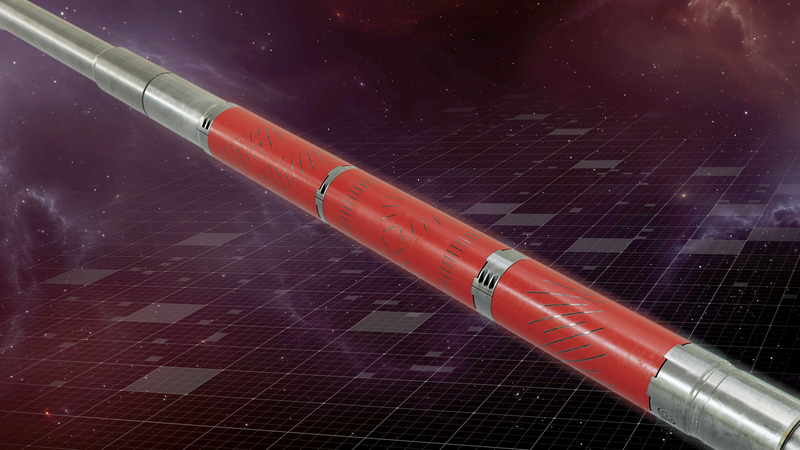
The industry’s first real-time, forward-looking 3D geological insights in horizontal wells before they are penetrated by the bit.
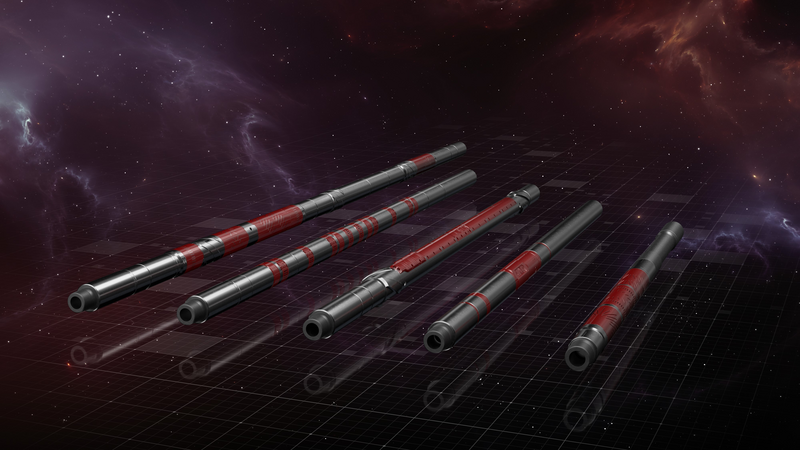
Fully digital and web-enabled to monitor and control drilling and logging operations from anywhere.

Gather real-time, high-quality data while drilling for improved subsurface insight, increased ROP, and enhanced wellbore stability.